Unconfigured Ad

Collapse
X
 
  • Time
  • Show
Clear All
new posts
  • zgene
    Junior Member
    • Sep 2012
    • 8

    #1

    Bioanalyzer for ChIPed DNA

    Dear All,
    I have a question regarding bioanalyzer for ChIPed DNA.
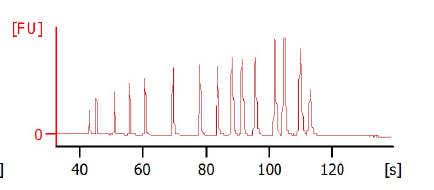
    When I do bioanalyzer for the input DNA, I get peaks at the proper range in bioanalyzer.
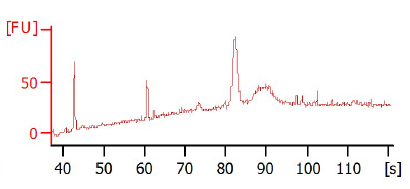
    But, for the immunoprecipitated samples, I got no peaks at all or strange peaks. I even do not have the marker peaks!
    I should mention that the concentration of ChIPed DNA was as low as 0.3 ng/µl (measured by Qubit HS kit) and I used 1 µl for bioanalyzer. So, I expected very low signals in bioanalyzer, but literally got nothing.
    These samples were loaded in a same bioanalyzer chip used for some other library prepped samples and they all worked well, which shows that there was no problem in bioanalyzer chip or experiment.
    Can anyone help me how to explain this?
    I am totally confused and cannot figure out what I should do!
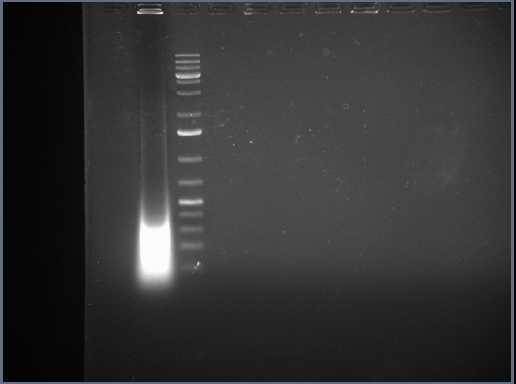
    In the attached you can find a gel photo of the sonicated chromatin as well as two bioanalyzer graphs of two different ChIPed samples.

    waiting for your replies...
    Click image for larger version

Name:	Ladder.png
Views:	1
Size:	27.0 KB
ID:	309065


    Click image for larger version

Name:	ChIPed Sample12.png
Views:	1
Size:	29.6 KB
ID:	309066

    Click image for larger version

Name:	gel photo after sonication.jpg
Views:	1
Size:	10.3 KB
ID:	309067
    Attached Files
    Last edited by zgene; 06-13-2016, 12:21 PM.
  • nucacidhunter
    Jafar Jabbari
    • Jan 2013
    • 1250

    #2
    It seems that one of the wells was not loaded with marker and the strange peak in other well could be due to contaminants from immunoprecipitation step. I could not figure which Bioanalyser trace is from input DNA.

    Comment

    • zgene
      Junior Member
      • Sep 2012
      • 8

      #3
      Originally posted by nucacidhunter View Post
      It seems that one of the wells was not loaded with marker and the strange peak in other well could be due to contaminants from immunoprecipitation step. I could not figure which Bioanalyser trace is from input DNA.

      Dear nucacidhunter,

      Thanks for the reply.
      Marker was loaded in all the wells.
      I did not attach the Input traces there, there was only a gel photo for that.
      The Input traces are now attached here.
      Click image for larger version

Name:	input.png
Views:	2
Size:	36.8 KB
ID:	305104
      For the contaimnation, I should say that I used the columns available in the kit (Abcam high sensitivity ChIP kit) which includes 3 washing steps with ethanol after DNA binding to the column.
      Do you think that its better to replace this step with qiagen kit to get less contaminants?

      Comment

      • nucacidhunter
        Jafar Jabbari
        • Jan 2013
        • 1250

        #4
        I would contact kit supplier before trying another column for clean up. It could be result of some inefficiency at steps prior to clean up. Sample showing no trace in BA should be rerun to make sure that it is reproducible.

        Comment

        Latest Articles

        Collapse

        • SEQadmin2
          How Immunogenomics Decodes Immunity’s Genetic Blueprint
          by SEQadmin2


          The immune system’s power comes from its genetic diversity, allowing myriad threats to be neutralized through first recognizing foreign antigens. That diversity is also what makes the immune system so difficult to study. Recent advances in sequencing technology and computational biology, however, are giving researchers new tools to understand immune responses and immune-related diseases in greater detail.

          This convergence of genetics, immunology, and computation...
          Yesterday, 05:41 AM
        • SEQadmin2
          Beyond CRISPR/Cas9: Understand, Choose, and Use the Right Genome Editing Tool
          by SEQadmin2


          CRISPR/Cas9 sparked the gene editing revolution for both research and therapeutics.1 But this system still showed severe issues that limited its applications. The most prominent were the heavy reliance on PAM sequences, delivery limitations, double-stranded breaks that prompt unintended edits and cell death, and editing inefficiency (both in targeting and in knock-in reliability).

          Despite this, “CRISPR helped turn genome editing from a specialized technique into
          ...
          07-31-2026, 11:01 AM

        ad_right_rmr

        Collapse

        News

        Collapse

        Topics Statistics Last Post
        Started by SEQadmin2, 08-24-2026, 10:32 AM
        0 responses
        42 views
        0 reactions
        Last Post SEQadmin2  
        Started by SEQadmin2, 08-20-2026, 11:17 AM
        0 responses
        48 views
        0 reactions
        Last Post SEQadmin2  
        Started by SEQadmin2, 08-18-2026, 10:05 AM
        0 responses
        55 views
        0 reactions
        Last Post SEQadmin2  
        Started by SEQadmin2, 08-13-2026, 12:22 PM
        0 responses
        50 views
        0 reactions
        Last Post SEQadmin2  
        Working...