 Tweet
Tweet
 RNA-Seq Data Analysis Workshop in Berlin, Germany
RNA-Seq Data Analysis Workshop
Quality Control, Read Mapping, Visualization and Downstream Analyses

When?
13 - 16 March 2018
Where?
PC-College, Stresemannstraße 78, 10963 Berlin, Germany
Link?
Advance your research. Understand RNA-Seq analyses challenges and solve them yourself.
In a nutshell
Scope and Topics
The purpose of this workshop is to get a deeper understanding in Next-Generation Sequencing (NGS) with a special focus on bioinformatics issues. Advantages and disadvantages of current sequencing technologies and their implications on data analysis will be discovered. You will be trained on understanding NGS data formats and handling potential problems/errors therein.
All workshop attendees will be enabled to perform important first tasks of NGS data analysis themselves. The course layout has been adapted to the needs of beginners in the field of NGS bioinformatics and allows scientists with no or little background in computer science to get a first hands-on experience in this new and fast evolving research topic.
Workshop Design
This workshop has been redesigned and adapted to the needs of beginners in the field of NGS bioinformatics and comprises this three course modules:
Requirements
Target Audience
Included in the Course
Speakers
Key Dates
Opening Date of Registration: 1 June 2017
Closing Date of Registration: 1 March 2018
Workshop: 13 - 16 March 2018 (9 am - 6 pm)
Attendance
Location: PC-College, Stresemannstraße 78, 10963 Berlin, Germany
Language: English
Available seats: 25 (first-come, first-served)
Registration fees:
registration fee: 1,298 EUR (excluding VAT)
Travel expenses and accommodation are not covered by the registration fee.
Contact
ecSeq Bioinformatics GmbH
Sternwartenstr. 29
04103 Leipzig
Germany
Email: [email protected]
Here you can get more information or apply!
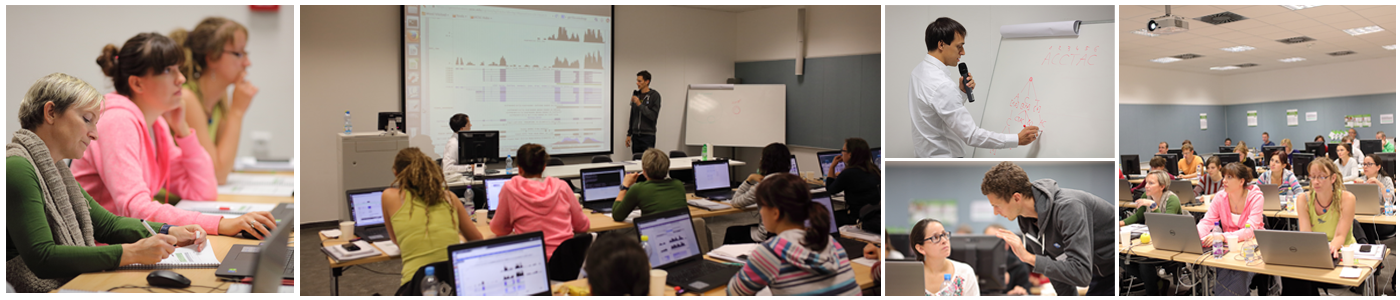
Quality Control, Read Mapping, Visualization and Downstream Analyses
When?
13 - 16 March 2018
Where?
PC-College, Stresemannstraße 78, 10963 Berlin, Germany
Link?

Advance your research. Understand RNA-Seq analyses challenges and solve them yourself.
In a nutshell
- Learn the essential computing skills for NGS bioinformatics
- Understand NGS analysis algorithms (e.g. read alignment) and data formats
- Use bioinformatics tools for handling RNA-Seq data
- Compare different approaches for differential expression analysis
Scope and Topics
The purpose of this workshop is to get a deeper understanding in Next-Generation Sequencing (NGS) with a special focus on bioinformatics issues. Advantages and disadvantages of current sequencing technologies and their implications on data analysis will be discovered. You will be trained on understanding NGS data formats and handling potential problems/errors therein.
All workshop attendees will be enabled to perform important first tasks of NGS data analysis themselves. The course layout has been adapted to the needs of beginners in the field of NGS bioinformatics and allows scientists with no or little background in computer science to get a first hands-on experience in this new and fast evolving research topic.
Workshop Design
This workshop has been redesigned and adapted to the needs of beginners in the field of NGS bioinformatics and comprises this three course modules:
- Linux for Bioinformatics: This module will introduce the essential tools and file formats required for NGS data analysis. It helps to overcome the first hurdles when entering this (for NGS analyses) unavoidable operating system.
- Introduction to NGS data analysis: Different methods of NGS will be explained, the most important notations be given and first analyses be performed. This course covers essential knowledge for analysing data of many different NGS applications.
- RNA-seq Data Analyses: In this module different bioinformatics tools for RNA-seq alignment will be described and tested. We then apply and compare the various approaches for differential expression analysis using RNA-Seq.
Requirements
- basic understanding of molecular biology (DNA, RNA, gene expression, PCR, ...)
Target Audience
- biologists or data analysts with no or little experience in analyzing RNA-Seq data
Included in the Course
- Course materials
- Catering
- Conference Dinner
Speakers
- Gero Doose (University of Leipzig) found and published several circularized RNAs in various RNA-Seq experiments. He specialized on split-read analysis some years ago and has a strong expertise in downstream analyses.
- Dr. David Langenberger (ecSeq Bioinformatics) started working with small non-coding RNAs in 2006. Since 2009 he uses HTS technolgies to investigate these short regulatory RNAs as well as other targets. He has been part of several large HTS projects, for example the International Cancer Genome Consortium (ICGC).
- Dr. Mario Fasold (ecSeq Bioinformatics) works in the analysis of microarray data since 2007 and developed several bioinformatics tools such as the Bioconductor package AffyRNADegradation and the Larpack program package. Since 2011 he specialized in the field of HTS data analysis and helped analysing sequecing data of several large consortium projects.
Key Dates
Opening Date of Registration: 1 June 2017
Closing Date of Registration: 1 March 2018
Workshop: 13 - 16 March 2018 (9 am - 6 pm)
Attendance
Location: PC-College, Stresemannstraße 78, 10963 Berlin, Germany
Language: English
Available seats: 25 (first-come, first-served)
Registration fees:
registration fee: 1,298 EUR (excluding VAT)
Travel expenses and accommodation are not covered by the registration fee.
Contact
ecSeq Bioinformatics GmbH
Sternwartenstr. 29
04103 Leipzig
Germany
Email: [email protected]
Here you can get more information or apply!
Comment