Unconfigured Ad

Collapse
X
 
  • Filter
  • Time
  • Show
Clear All
new posts
  • Haiqu
    Member
    • Aug 2019
    • 19

    Homebrew gear

    Doesn't seem to be a topic heading for this, maybe there should be one so that relevant data can be collected in one place.

    There are several projects around for PCR's but very little else. Anyone heard of a DIY sequencer (except for the one I already know about by Alexander Sokolov) or synthesizer?

    Good tutorials would also be welcomed. I managed to find a great one on DNA extraction (starts here: https://www.youtube.com/watch?v=tcPgdR9_t64 ) but very little else.

    For all the interest in Citizen Science and biohacking, there seems to be quite a dearth of useful information on the basics.
    Last edited by Haiqu; 08-02-2019, 09:03 AM.
  • Haiqu
    Member
    • Aug 2019
    • 19

    #2
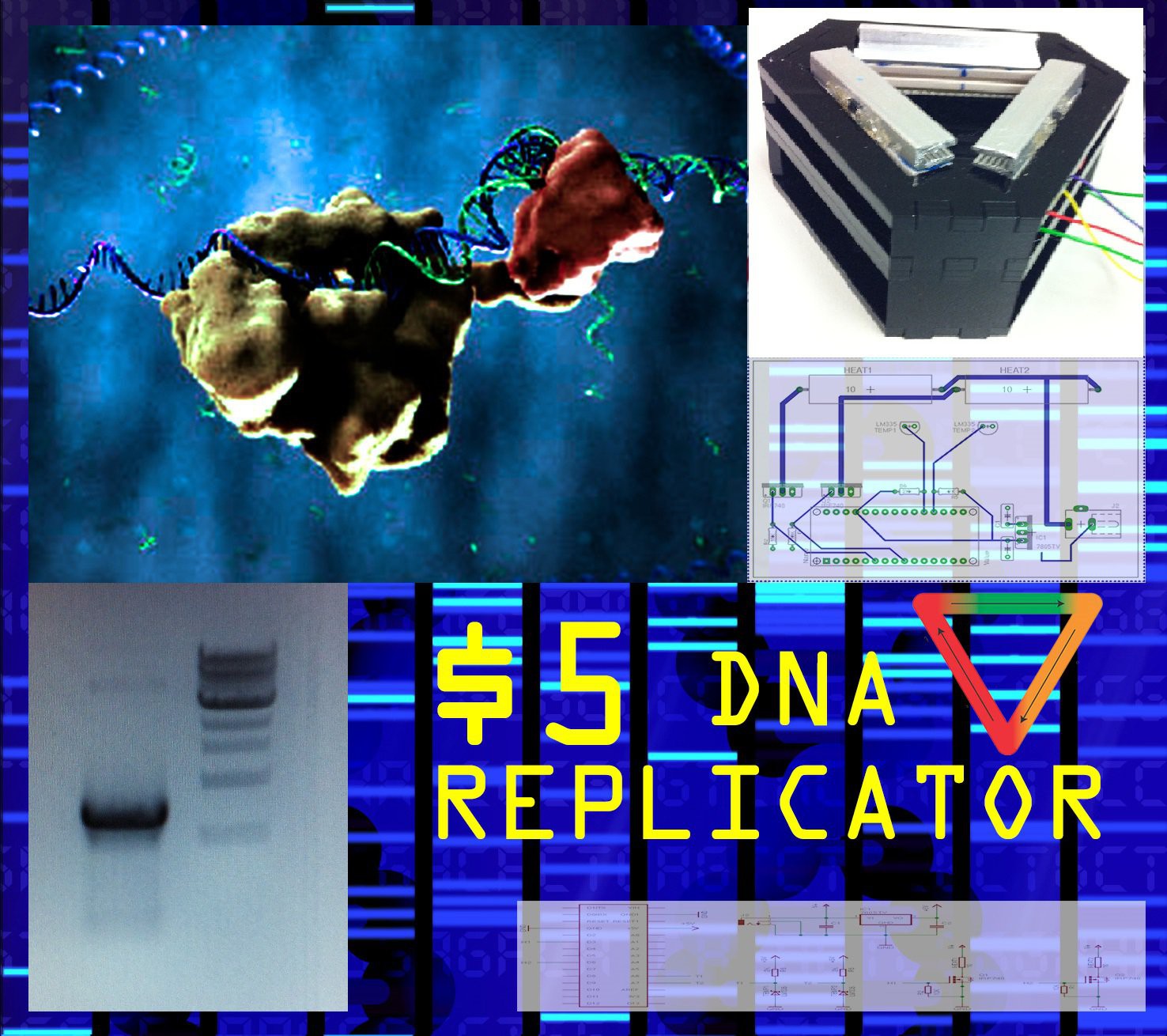
    PCR machines:

    What's all this for then?The Biotechnology Age is well under way. But like the Silicon Age, I think it will only really explode in growth once the entry price reaches a point where a few college dropouts can afford to build a biotech lab in their parent's basement, and with their inventions, put a dent in the universe.The biotech laboratory is getting more and more streamlined, and experiments that would once have taken weeks or months can be performed in days, with much improved Recombinant DNA techniques, next-day-delivery of DNA primers, and cheap Gene synthesis. Although we can now forget about many old fashioned (but still widely used) techniques like Plasmid Cloning by Restriction Enzyme Digest, which require boxes full of expensive enzymes, the one technique that kickstarted the Biotech Revolution is still an absolute necessity.PCR, or the Polymerase Chain Reaction, is one of the greatest inventions of the 20th Century. With it we can take a single stand of DNA and make trillions of identical copies. With these copies, we can identify a murderer from a speck of skin, DNA barcode living creatures to study entire ecological systems or identify the cause of a disease for personalised medicine. And because


    Sequencer:

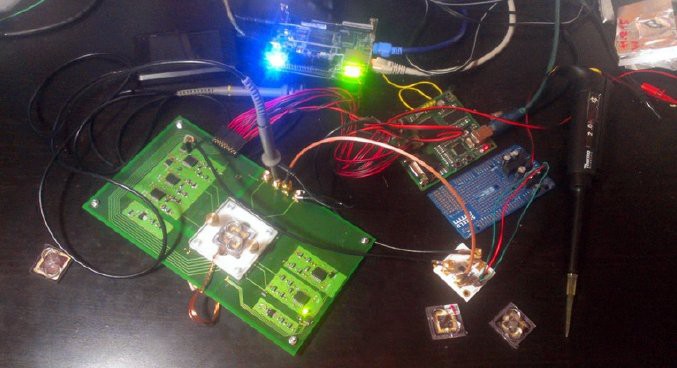
    Hello everybody. My name is Alexander Sokolov, and I am an expert in quantum cryptography. I want to tell you how to make a DNA sequencer, a device for decoding deoxyribonucleic acid (DNA), at home. The market price for such a device is about $50,000 dollars.Figure 01: The “heart” of my device for reading DNA Let me provide you a brief introduction about genetics. In 2003, a sensational declaration was made – scientists had finally decrypted the human genome. This is known as the Human Genome Project, and completion of this great international project that would allow for reading DNA was for about $3 billion dollars. The human genome is built from DNA, which is the source code (or building plan) of an organism. DNA is a double helix consisting of 4 kinds of nucleotides (Adenine, Guanine, Cytosine, and Thymine), which are repeated in the human genome about 3 billion times. As all the information on your computer is encrypted in bits, the instruction for assembling all the proteins of the human body is encrypted in the nucleotides. If we


    Tutorials:


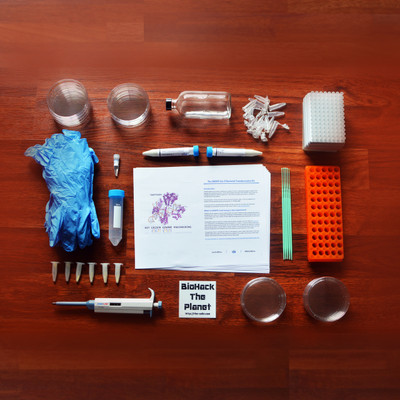
    CRISPR kit:


    Any additions welcomed.

    Comment

    • Haiqu
      Member
      • Aug 2019
      • 19

      #3
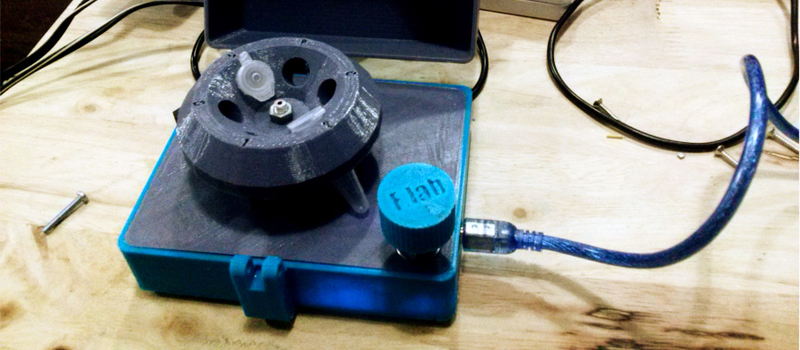
      3D printed centrifuge:

      [F.Lab] is really worried that we are going to prepare a DNA sample from saliva, dish soap, and rubbing alcohol in their 3D-printed centrifuge and then drink it like a shot. Perhaps they have learn…

      Comment

      • Haiqu
        Member
        • Aug 2019
        • 19

        #4
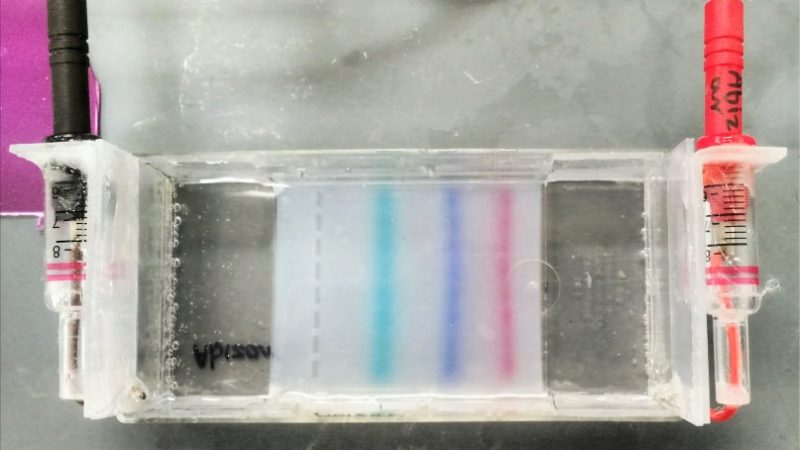
        Electrophoresis:

        If you want to get into electronics, it’s pretty straightforward: read up a little, buy a breadboard and some parts, and go to town. Getting into molecular biology as a hobby, however, presen…

        Comment

        • SNPsaurus
          Registered Vendor
          • May 2013
          • 525

          #5
          Those are all super cool, but I think the root of the problem is that sequencers are multiple-fold more complex than any of the other devices. A centrifuge spins fast, PCR heats and cools, but sequencing has to measure "something" on a highly multiplex scale.

          Even the sequencer in the above uses existing materials at the core rather than coming up a simple shortcut for "good enough" sequencing. It would be hard to find a sub-$1000 sequencing service provider, even for a small project since the lowest cost run is around that. Maybe a maker space could get an old MiSeq and combine samples from members on a run, but it will need service and calibration.
          Providing nextRAD genotyping and PacBio sequencing services. http://snpsaurus.com

          Comment

          • Haiqu
            Member
            • Aug 2019
            • 19

            #6
            As another user pointed out, a library can be sent to sequencing services to be batched with other work. Until today I didn't know such services were available in Australia, they certainly don't advertise.

            The complexity of a sequencer is no worse that many other machines I've worked on (or designed, for that matter.) The hard part is, as you rightly point out, the sensor assembly. Until these are available as an off-the-shelf item, building a sequencer is in the too-hard basket.

            Comment

            • Haiqu
              Member
              • Aug 2019
              • 19

              #7
              What would the ideal sequencer look like for the hobbyist?

              My postulate for the required features:

              1. Cheap to build, but not necessarily simple.
              2. Uses readily available, relatively inexpensive and non-proprietary reagents.
              3. Utilizes a cheap disposable flow cell, or a reusable flow cell.
              4. Smaller than a desktop PC, and preferrably much lighter.
              5. As accurate as results from Gen2 technologies (2009 era).
              6. No complex alignment, or realignment, to maintain accuracy.

              Desirable but unnecessary features:

              1. Ability to sequence the human genome. Plenty of cheap services available for this.
              2. Speedy results. Hobbyists have more time than money.
              3. Not fiddly to operate. For a single machine, a learning curve is acceptable.
              4. High resolution. 1x is probably fine, interesting results can be farmed out if high res is required.
              5. Simple bioinformatics. The hacker culture can find a way to extract data.

              Surely there has been an abandoned technology that fits these criteria ...
              Last edited by Haiqu; 08-06-2019, 07:20 PM.

              Comment

              Latest Articles

              Collapse

              • SEQadmin2
                Proteomic Platforms: How to Choose the Right Analytical Strategy to Improve Detection and Clinical Applications
                by SEQadmin2


                Proteomics platforms are evolving rapidly, with advances in mass spectrometry and affinity-based approaches expanding what researchers can detect and at what scale. As the field moves toward deeper proteome coverage and clinical applications, scientists face an increasingly complex landscape of tools. This article will explore how researchers are navigating these choices to find the right platform for their work.

                The systematic characterization of the human proteome has
                ...
                07-20-2026, 11:48 AM
              • SEQadmin2
                Advanced Sequencing Platforms Tackle Neuroscience’s Toughest Genomics Problems
                by SEQadmin2


                Genomics studies in neuroscience face a special challenge due to the brain’s complexity and scarcity of samples. Mapping changes in cell type and state using conventional next-generation sequencing methods remains challenging. Advances in technologies like single-cell sequencing, spatial transcriptomics, and long-read sequencing have opened the door to deeper studies of the brain and diseases like Alzheimer’s, amyotrophic lateral sclerosis (ALS), and schizophrenia.
                ...
                07-09-2026, 11:10 AM
              • SEQadmin2
                Cancer Drug Resistance: The Lingering Barrier to Rising Survival
                by SEQadmin2


                Cancer survival rates have significantly increased in the last few decades in the United States, reaching a combined 70% 5-year survival rate by 2021. Behind this number, there are years of research to find new therapies, drug targets, and early detection methods. But there is one core challenge that keeps slowing down these advances, and it’s about drug resistance.

                There is no single reason why many patients don’t respond to treatment as expected. Cancer is...
                07-08-2026, 05:17 AM

              ad_right_rmr

              Collapse

              News

              Collapse

              Topics Statistics Last Post
              Started by SEQadmin2, 07-24-2026, 12:17 PM
              0 responses
              16 views
              0 reactions
              Last Post SEQadmin2  
              Started by SEQadmin2, 07-23-2026, 11:41 AM
              0 responses
              18 views
              0 reactions
              Last Post SEQadmin2  
              Started by SEQadmin2, 07-20-2026, 11:10 AM
              0 responses
              24 views
              0 reactions
              Last Post SEQadmin2  
              Started by SEQadmin2, 07-13-2026, 10:26 AM
              0 responses
              37 views
              0 reactions
              Last Post SEQadmin2  
              Working...