Unconfigured Ad

Collapse
X
 
  • Filter
  • Time
  • Show
Clear All
new posts
  • iuliachiciudean
    Junior Member
    • Oct 2015
    • 3

    PacBio, SMART, assembly problem of de novo small genome

    Hey,

    I am very new here and I don't have mach experience with bioinfo and sequencing.

    I need your help because i recently send the DNA of one bacteria to be sequence by PacBio technology and i asked the sequencing company that I want a de novo genome assembly.

    At the beginning they send a report in witch they imply that my DNA was contaminated before sequencing. As i told them that priory to send them the DNA I dis an 16S sequencing with another company and all was good, they replay that is their mistake and they will re-assembly the genome again.

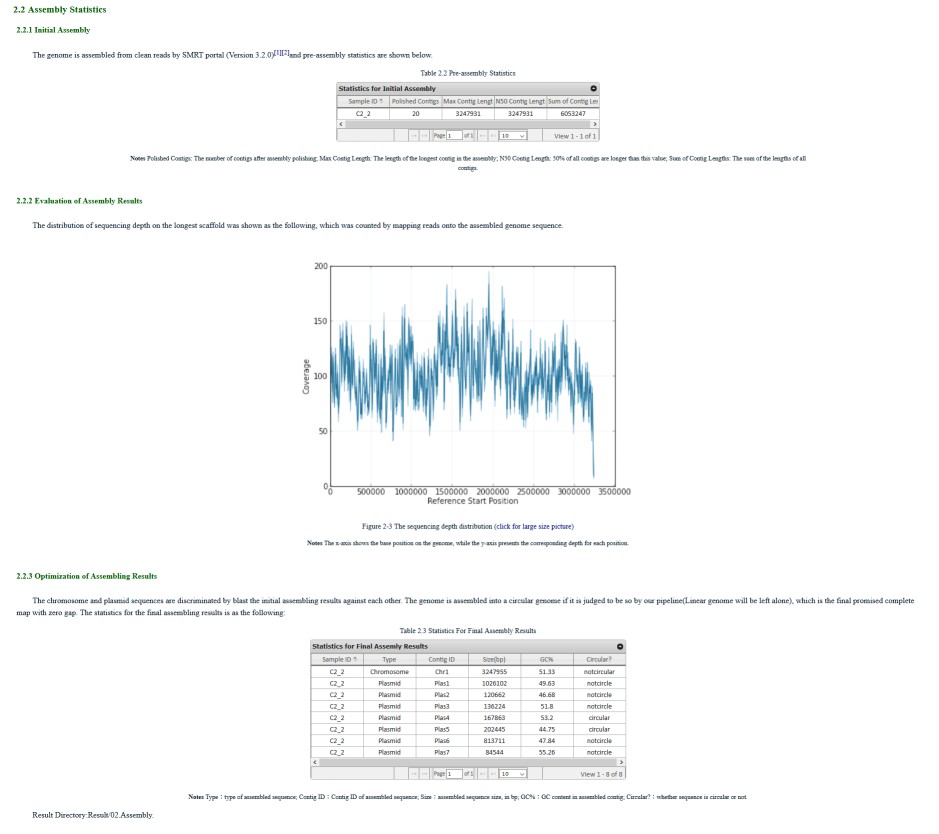
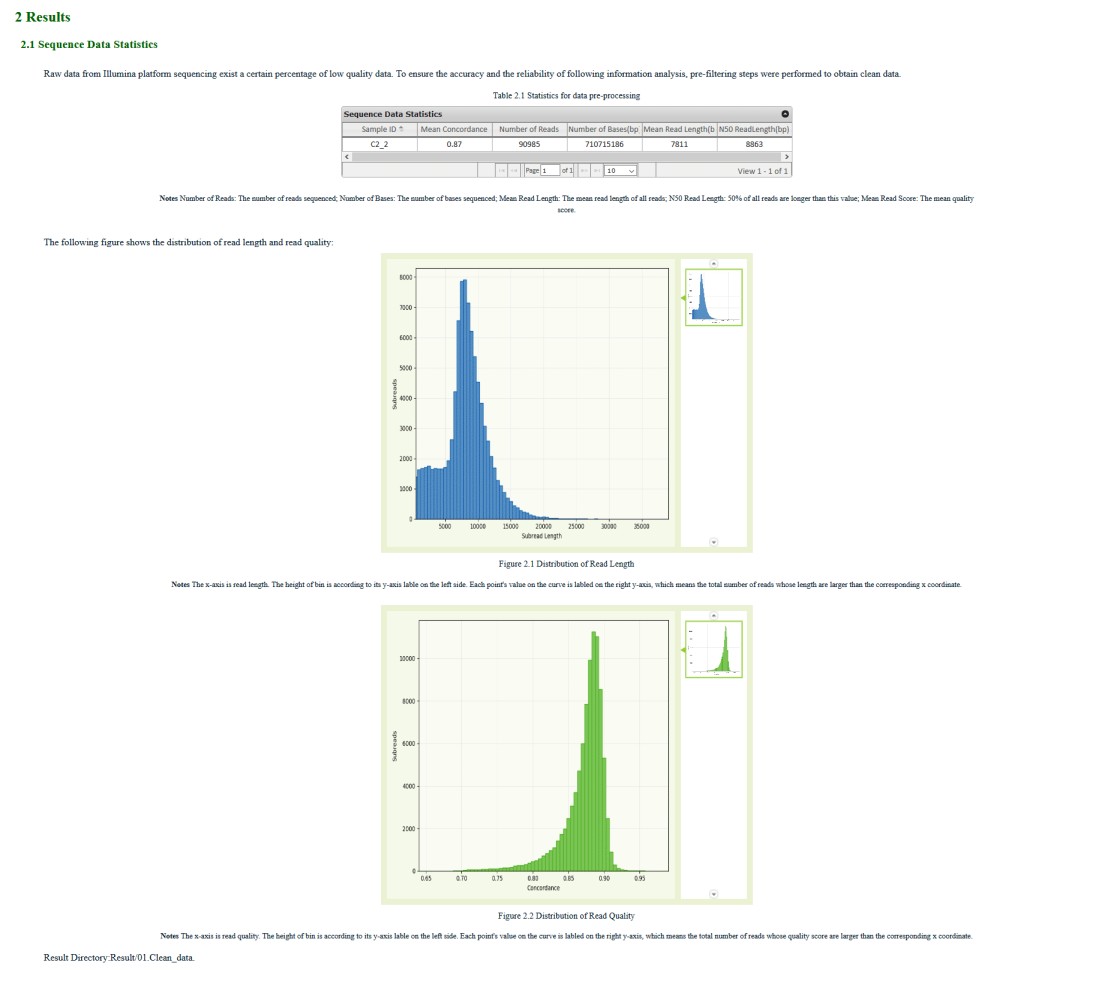
    Now I just got their new report and is a mess. (I am attaching the report).

    I don't even know what to ask from them anymore. Insted of one circular genome I have one non-circular chromosome and 7!!!!! plasmids.

    Any of your advise will be very welcomed.Click image for larger version
Name:	Results 1.jpg
Views:	1
Size:	87.9 KB
ID:	309555

    Click image for larger version

Name:	Results 2 (1).jpg
Views:	1
Size:	83.9 KB
ID:	309556
  • luc
    Senior Member
    • Dec 2010
    • 469

    #2
    Nothing about the read metrics raises warning flags - they could certainly have generated longer library molecules though since they did not multiplex the library.

    Is the genome size about what you expected?

    I would try additional assemblies with subsets of the data for examples only the longest reads. 50x coverage would be plenty. I would also try Canu as an alternative assembler.

    Comment

    • iuliachiciudean
      Junior Member
      • Oct 2015
      • 3

      #3
      Thx for your suggestion.

      The genome size should be bigger, around 5.5 Mb.

      I'm thinking that some of the "plasmids" are actually part of the chromosome. Or is also possible to have 2 chromosomes. This future can be found in this bacteria genus.

      Comment

      • Bukowski
        Senior Member
        • Jan 2010
        • 388

        #4
        Originally posted by iuliachiciudean View Post
        Thx for your suggestion.

        The genome size should be bigger, around 5.5 Mb.

        I'm thinking that some of the "plasmids" are actually part of the chromosome. Or is also possible to have 2 chromosomes. This future can be found in this bacteria genus.
        Judging from the total size of the contigs that would be my suspicion, because it looks like you have the whole 5.5Mb there in some form - just not in a single contig (which you can't guarantee, even with PacBio, all the time).

        Comment

        • iuliachiciudean
          Junior Member
          • Oct 2015
          • 3

          #5
          Originally posted by Bukowski View Post
          Judging from the total size of the contigs that would be my suspicion, because it looks like you have the whole 5.5Mb there in some form - just not in a single contig (which you can't guarantee, even with PacBio, all the time).
          So do you think would be possible to solve this only by doing a new assembly with different parameters (which ones?)?

          Or should we do more sequencing?

          Comment

          • SNPsaurus
            Registered Vendor
            • May 2013
            • 525

            #6
            I think the confusion is that they are calling all the contigs except for the largest "plasmid" which would be premature to do so without other evidence, especially if they are called as non-circular. Other than that, it is an OK PacBio assembly. I'd say a majority of the time a bacterial genome assembles as a single contig but a significant minority is fragmented into multiple contigs.

            I'd blast the resulting contigs. Usually it is obvious if it is a plasmid from the blast results. If you really really want a better assembly then it might be worth to re-sequence now that newer kits have been released with longer read lengths. The short fragment size may have been due to DNA quality, though.

            I would try Canu assembly with a higher expected coverage since you have the read depth to do so. The only other thing I can think of is that some libraries have high rates of palindromic reads due to un-repaired ends folding back and acting as a barbell adapter. This can mess up assembly. The newest version of the SMRT assembler chooses a single subread from each well to avoid some of the problems with the palindromes (I think) so I'd check if they assembled with the System 6 update. We filter palindromes before Canu to avoid the problem.
            Providing nextRAD genotyping and PacBio sequencing services. http://snpsaurus.com

            Comment

            Latest Articles

            Collapse

            • SEQadmin2
              Proteomic Platforms: How to Choose the Right Analytical Strategy to Improve Detection and Clinical Applications
              by SEQadmin2


              Proteomics platforms are evolving rapidly, with advances in mass spectrometry and affinity-based approaches expanding what researchers can detect and at what scale. As the field moves toward deeper proteome coverage and clinical applications, scientists face an increasingly complex landscape of tools. This article will explore how researchers are navigating these choices to find the right platform for their work.

              The systematic characterization of the human proteome has
              ...
              Yesterday, 11:48 AM
            • SEQadmin2
              Advanced Sequencing Platforms Tackle Neuroscience’s Toughest Genomics Problems
              by SEQadmin2


              Genomics studies in neuroscience face a special challenge due to the brain’s complexity and scarcity of samples. Mapping changes in cell type and state using conventional next-generation sequencing methods remains challenging. Advances in technologies like single-cell sequencing, spatial transcriptomics, and long-read sequencing have opened the door to deeper studies of the brain and diseases like Alzheimer’s, amyotrophic lateral sclerosis (ALS), and schizophrenia.
              ...
              07-09-2026, 11:10 AM
            • SEQadmin2
              Cancer Drug Resistance: The Lingering Barrier to Rising Survival
              by SEQadmin2


              Cancer survival rates have significantly increased in the last few decades in the United States, reaching a combined 70% 5-year survival rate by 2021. Behind this number, there are years of research to find new therapies, drug targets, and early detection methods. But there is one core challenge that keeps slowing down these advances, and it’s about drug resistance.

              There is no single reason why many patients don’t respond to treatment as expected. Cancer is...
              07-08-2026, 05:17 AM

            ad_right_rmr

            Collapse

            News

            Collapse

            Topics Statistics Last Post
            Started by SEQadmin2, Yesterday, 11:10 AM
            0 responses
            9 views
            0 reactions
            Last Post SEQadmin2  
            Started by SEQadmin2, 07-13-2026, 10:26 AM
            0 responses
            30 views
            0 reactions
            Last Post SEQadmin2  
            Started by SEQadmin2, 07-09-2026, 10:04 AM
            0 responses
            40 views
            0 reactions
            Last Post SEQadmin2  
            Started by SEQadmin2, 07-08-2026, 10:08 AM
            0 responses
            25 views
            0 reactions
            Last Post SEQadmin2  
            Working...