Unconfigured Ad

Collapse
X
 
  • Filter
  • Time
  • Show
Clear All
new posts
  • Kitty
    Member
    • Jul 2011
    • 10

    Nextera Problem: Odd fragment size after gel selection

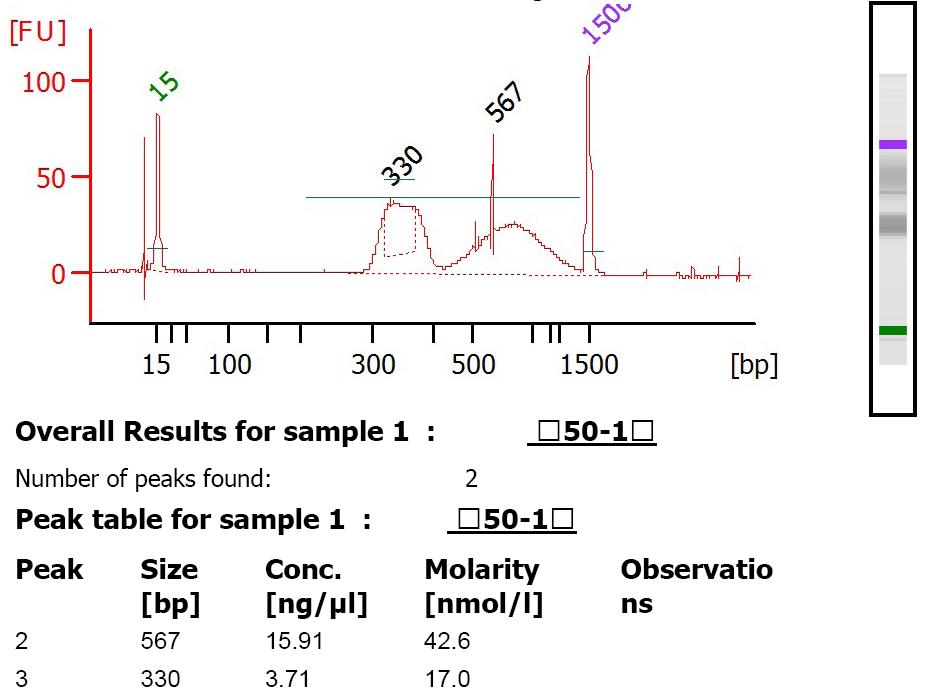
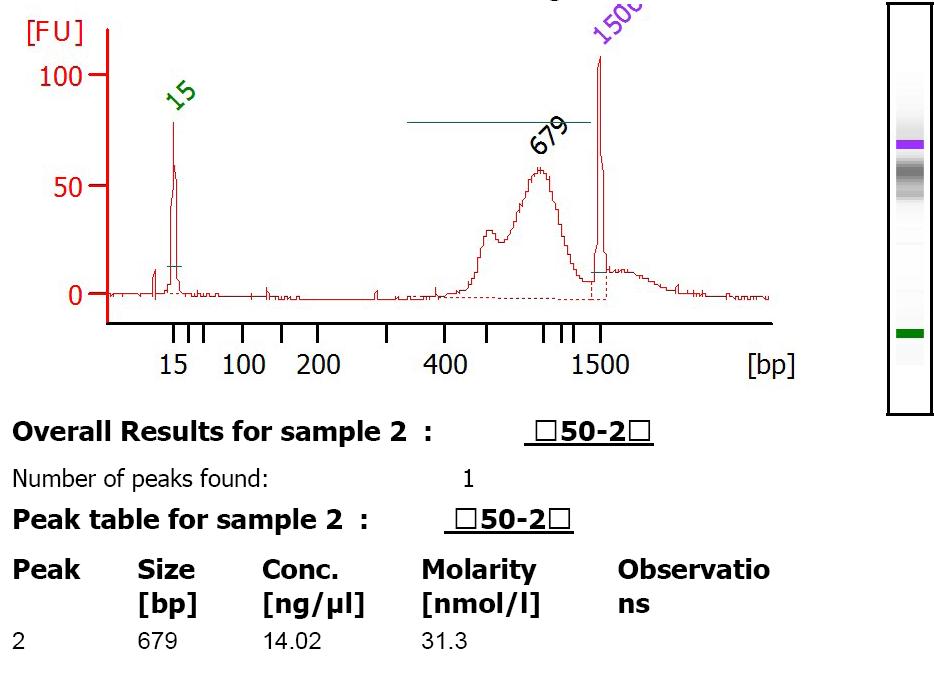
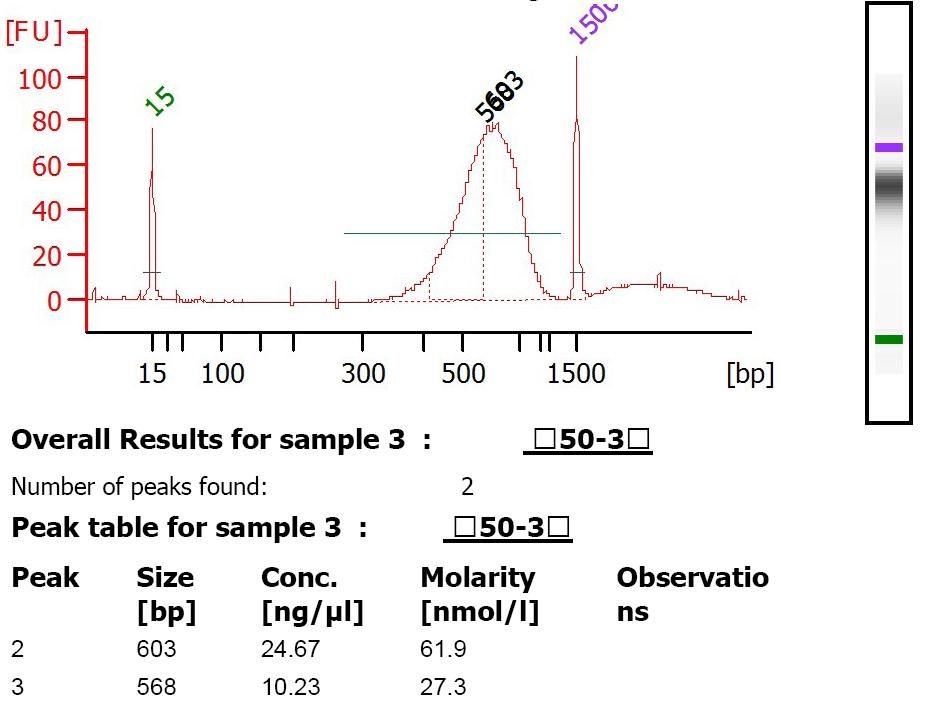
    Hi guys, I'm constructing a PE library by using the Nextera DNA library Prep Kit (Illumina compatible). However, when I cut down the 300-350bp, 450-500bp, 600-650bp region separately after 2.0% agarose gel electrophoresis, there comes double peaks instead of a single narrow peak (pictures). I'm sure there's no problem during gel selection, but obviously, this cannot meet the requirement of a PE library. Is there anyone who has some ideas on this?

    Start with 150ng gDNA, and after 10 cycles of PCR:
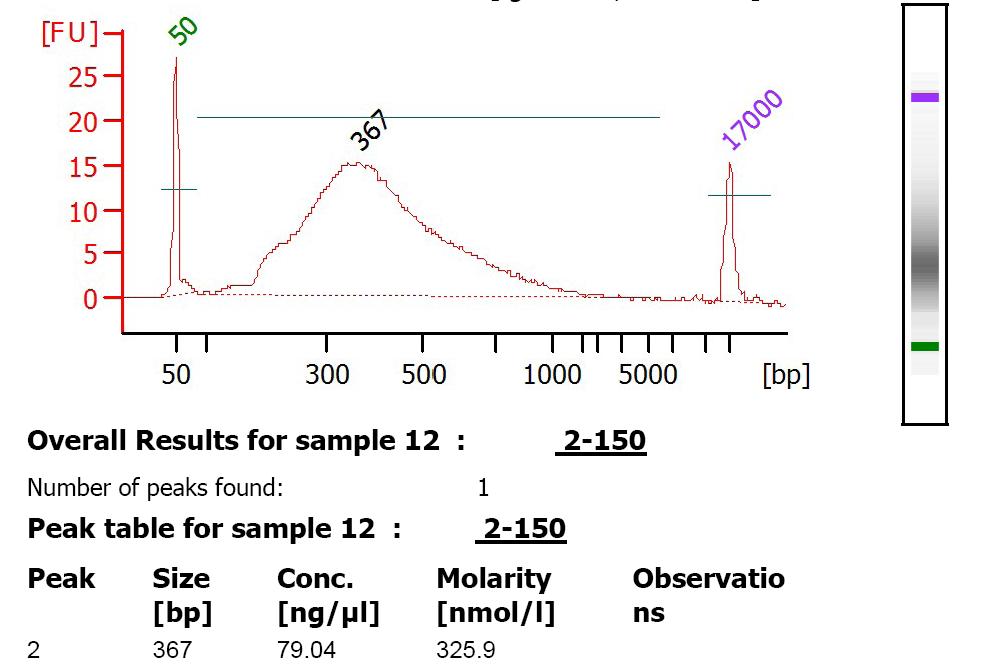
    Click image for larger version

Name:	pcr.JPG
Views:	1
Size:	61.3 KB
ID:	307652

    gel selection 300-350bp:
    Click image for larger version

Name:	300-350bp.JPG
Views:	1
Size:	60.9 KB
ID:	307653

    gel selection 450-500bp:
    Click image for larger version

Name:	450-500bp.JPG
Views:	1
Size:	57.4 KB
ID:	307654

    gel selection 600-650bp:
    Click image for larger version

Name:	600-650bp.JPG
Views:	1
Size:	63.1 KB
ID:	307655
  • pmiguel
    Senior Member
    • Aug 2008
    • 2328

    #2
    Hi Kitty,
    This is a very common issue with Illumina libraries. The good news is that your libraries are probably fine.
    We sometimes just denature the libraries and run them on an RNA chip to determine their size, etc. Info on how to do that here:

    Bridged amplification & clustering followed by sequencing by synthesis. (Genome Analyzer / HiSeq / MiSeq)


    As to what causes the issue exactly, I think it is not completely clear. But probably either the fragments are annealing end-to-end (adapter-to-adapter) forming daisy chains of amplicons, or adapters on both sides of otherwise unrelated amplicons are annealing after denaturation ("bubble products"). More discussion of the possibilities here:

    Bridged amplification & clustering followed by sequencing by synthesis. (Genome Analyzer / HiSeq / MiSeq)


    --
    Phillip

    Comment

    • Kitty
      Member
      • Jul 2011
      • 10

      #3
      Hi Phillip,
      I think you're right, and I'll try to check it on an RNA chip.
      Well, as far as I know, when we loading the library on the Illumina flow cell, there will be a denature step before bridge PCR. So does that mean the "daisy chains" will be separated and may not disturb the output data (insert size distribution)?

      Comment

      • pmiguel
        Senior Member
        • Aug 2008
        • 2328

        #4
        Yes. The problem is mainly that the multimers interfere with determining the total amount of your library. Also they might hide adapter dimer contamination. But that should be obvious after denaturation and running on an RNA chip.

        --
        Phillip

        Comment

        Latest Articles

        Collapse

        • SEQadmin2
          Proteomic Platforms: How to Choose the Right Analytical Strategy to Improve Detection and Clinical Applications
          by SEQadmin2


          Proteomics platforms are evolving rapidly, with advances in mass spectrometry and affinity-based approaches expanding what researchers can detect and at what scale. As the field moves toward deeper proteome coverage and clinical applications, scientists face an increasingly complex landscape of tools. This article will explore how researchers are navigating these choices to find the right platform for their work.

          The systematic characterization of the human proteome has
          ...
          07-20-2026, 11:48 AM
        • SEQadmin2
          Advanced Sequencing Platforms Tackle Neuroscience’s Toughest Genomics Problems
          by SEQadmin2


          Genomics studies in neuroscience face a special challenge due to the brain’s complexity and scarcity of samples. Mapping changes in cell type and state using conventional next-generation sequencing methods remains challenging. Advances in technologies like single-cell sequencing, spatial transcriptomics, and long-read sequencing have opened the door to deeper studies of the brain and diseases like Alzheimer’s, amyotrophic lateral sclerosis (ALS), and schizophrenia.
          ...
          07-09-2026, 11:10 AM
        • SEQadmin2
          Cancer Drug Resistance: The Lingering Barrier to Rising Survival
          by SEQadmin2


          Cancer survival rates have significantly increased in the last few decades in the United States, reaching a combined 70% 5-year survival rate by 2021. Behind this number, there are years of research to find new therapies, drug targets, and early detection methods. But there is one core challenge that keeps slowing down these advances, and it’s about drug resistance.

          There is no single reason why many patients don’t respond to treatment as expected. Cancer is...
          07-08-2026, 05:17 AM

        ad_right_rmr

        Collapse

        News

        Collapse

        Topics Statistics Last Post
        Started by SEQadmin2, 07-24-2026, 12:17 PM
        0 responses
        21 views
        0 reactions
        Last Post SEQadmin2  
        Started by SEQadmin2, 07-23-2026, 11:41 AM
        0 responses
        19 views
        0 reactions
        Last Post SEQadmin2  
        Started by SEQadmin2, 07-20-2026, 11:10 AM
        0 responses
        26 views
        0 reactions
        Last Post SEQadmin2  
        Started by SEQadmin2, 07-13-2026, 10:26 AM
        0 responses
        38 views
        0 reactions
        Last Post SEQadmin2  
        Working...